Car or helicopter, from Geneva or Lyon: the real prices and times to reach Courchevel, and the Saturday trap.
Reaching Courchevel is simple when it’s properly prepared, and a genuine headache on a school-holiday Saturday when it isn’t. I arrange this journey several hundred times a season; here are the real options, with prices, times, and the one trap that matters.
Prices at a glance
Indicative rates, outside peak periods: Christmas week and New Year week cost more, on the road as in the air. I confirm the exact figure when booking.
Which airport to choose
Geneva is the default gateway, and for good reasons: the widest choice of flights, a business aviation terminal, and two to two and a half hours by road in normal conditions. It’s what I book in most cases.
Lyon-Saint-Exupéry nonetheless deserves to be compared more often than it is. The drive is a little longer, but it avoids the Geneva bottleneck entirely, and on a saturated Saturday, that detour is sometimes worth an hour. For a private flight, Chambéry is the closest runway to the Tarentaise, and Grenoble remains an option depending on slots.
My instinct, when a client gives me their dates before their flights: I choose the airport according to the day of arrival, never the other way round. It’s the only order that produces good results.
The train, the option too few people consider
Courchevel has an advantage few resorts share: a proper valley station at Moûtiers-Salins-Brides-les-Bains, some twenty minutes’ drive from the resort, served directly from Paris and, in season, from London.
I suggest it more and more, for a very concrete reason: on a Saturday in February, the train doesn’t suffer the jams that paralyse the Tarentaise. You step off at Moûtiers, a car is waiting, and you’re at the chalet in half an hour while the road below is at a standstill. It also happens to be the most civilised way to travel with ski equipment.
The helicopter and the altiport
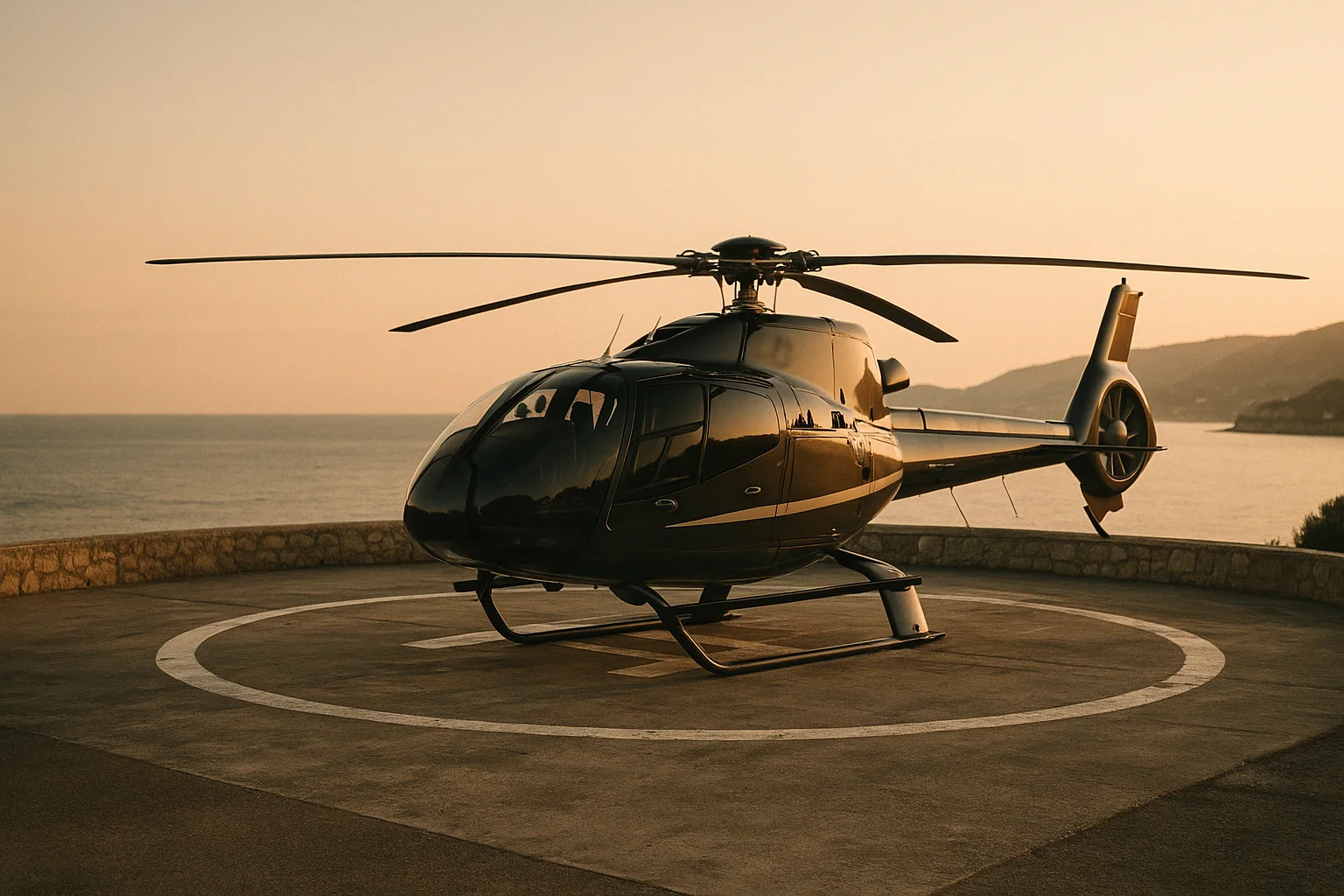
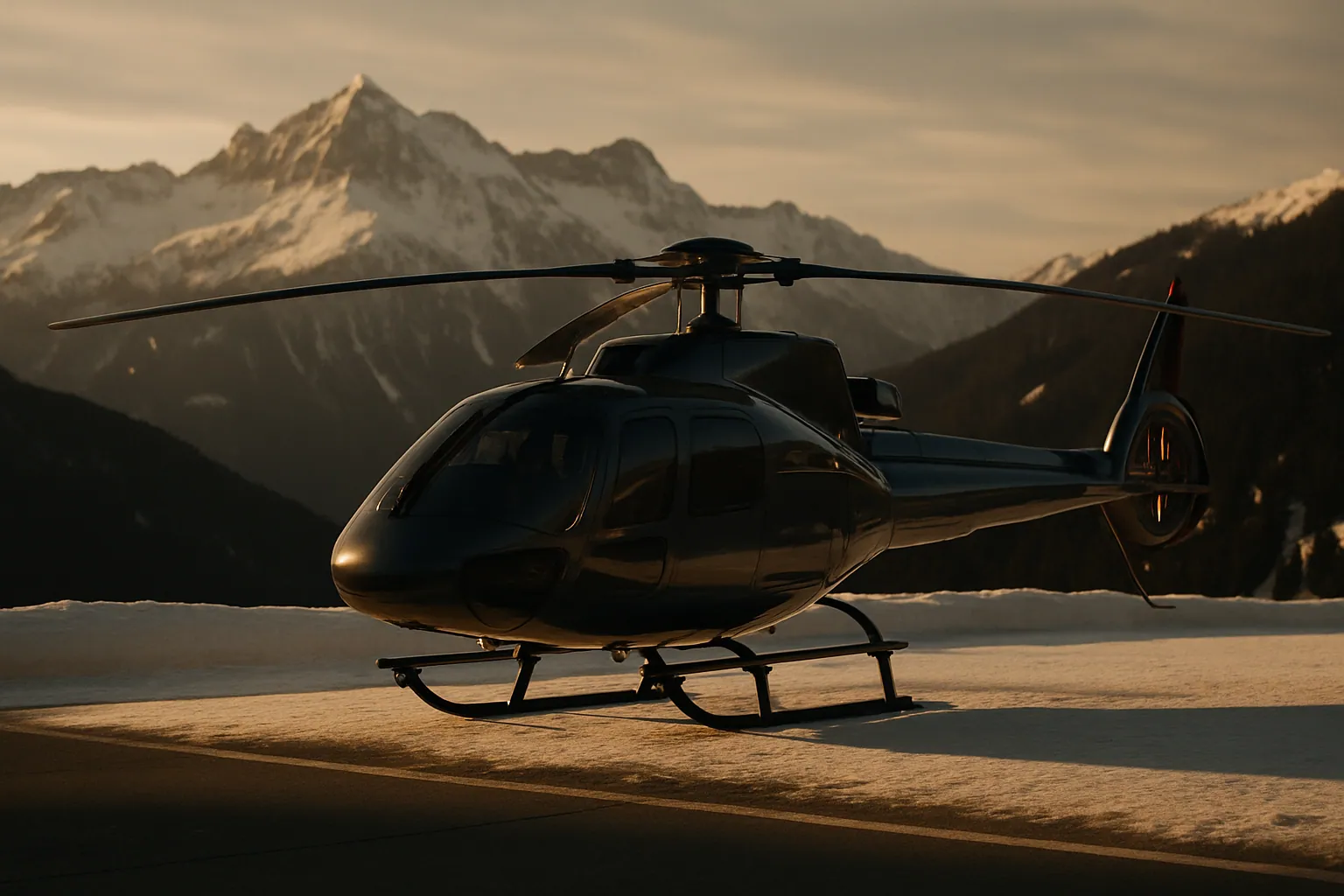
Courchevel has one of the rare altiports in the Alps where you land in the heart of the resort, at a little over two thousand metres. Its runway is short and sloping, an approach that demands qualified pilots, and also what makes it an arrival whose final minutes nobody forgets.
Two limits to know, because they always surprise: helicopters fly by day and by sight, so an evening flight in December doesn’t exist; and mountain weather decides, not us. I systematically arrange a road fallback for arrival flights. That isn’t pessimism, it’s experience.
Saturday, the only real enemy
Here is the most useful piece of advice in this article, and it costs nothing. In the Tarentaise, Saturday is changeover day: every resort in the valley swaps guests on the same day, and all of it pours onto the same road. Two and a half hours become four, sometimes five. The altiport, for its part, is swamped with requests.
- Arrive on Sunday or Friday evening if your rental allows, many owners agree, especially outside school holidays.
- If you must arrive on a Saturday, aim for before eleven or after six. The middle of the day is the worst window.
- Plan nothing for the evening of arrival: no table, no massage, no ski fitting. You’ll be late.
- Have equipment delivered and fitted at the chalet, and collect lift passes before you arrive rather than in the Sunday-morning queue.
- On the way back, leave the chalet three hours before a commercial flight from Geneva. It sounds excessive on the day; it stops sounding excessive when the valley is blocked.
The car: what’s compulsory, what’s useful
From 1 November to 31 March, vehicles driving in the listed mountain communes must be equipped, winter tyres or removable devices. On the final climb to Courchevel, that isn’t administrative box-ticking: a badly shod vehicle stops, and blocks everyone behind it.
Beyond the law, what genuinely makes the difference: a driver who does this road all season and knows what time the valley clogs up, a vehicle big enough for ski luggage (it’s almost always volume that’s the problem, not the number of passengers) and child seats fitted before you arrive. These are details, and they’re exactly the ones my clients mention afterwards.